
Nobody plans for the moment their mental health begins to feel unmanageable. Nobody wakes up expecting that anxiety will suddenly make it hard to breathe in a crowded MTR carriage, or that a low mood will quietly stretch from a few difficult days into months of emotional exhaustion. These experiences do not arrive with warning labels. They build gradually, often invisibly, until functioning the way you once did feels unexpectedly heavy.
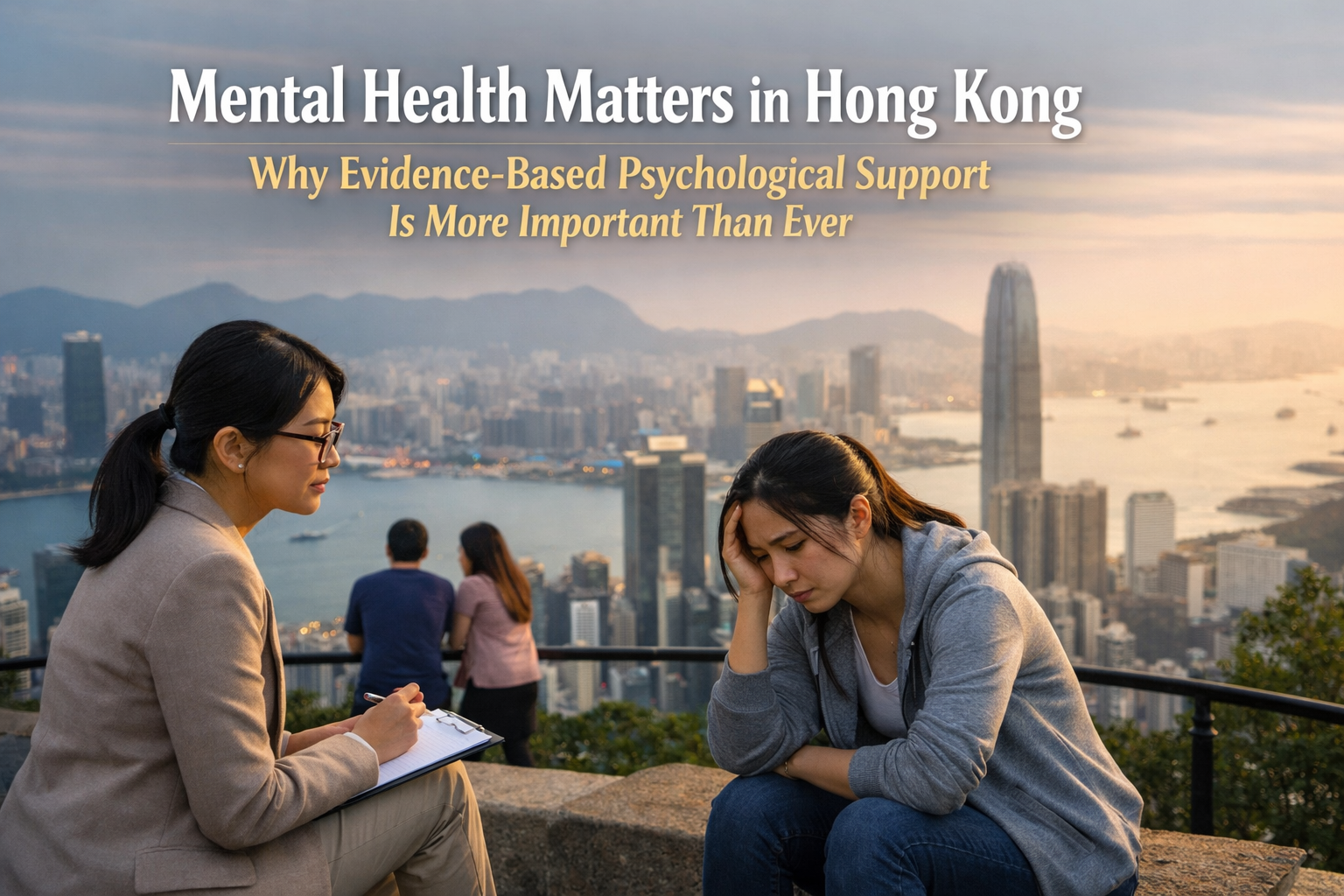
And that is precisely when informed, evidence-based support becomes most important.
Mental health is not a luxury topic reserved for moments of crisis. It is the foundation that supports how we think, work, relate to others, and navigate daily stress. In a city as fast-paced and achievement-driven as Hong Kong, where professional performance and academic success are often prioritized above emotional wellbeing, psychological strain can go unnoticed for long periods. Yet ignoring it does not make it disappear. It simply deepens quietly in the background.
The Pressure Beneath the Surface
Living in Hong Kong means functioning within one of the most dynamic and high-performing cities in the world. The skyline reflects ambition, the education system reflects discipline, and the business culture reflects relentless drive. On the surface, this creates an image of efficiency and success. Beneath that surface, however, many individuals quietly carry a sustained level of psychological pressure that rarely receives equal attention.
Hong Kong’s cost of living is among the highest globally, and financial stability often requires continuous effort. Housing is compact and expensive, which means many families share limited space while balancing demanding schedules. The physical environment itself can contribute to a subtle but constant sense of compression — crowded transportation, dense residential buildings, and fast-paced daily routines. Over time, this can reduce opportunities for true mental rest. Even leisure can feel scheduled rather than restorative.
The work culture reinforces this intensity. Long hours are often normalized, and professional commitment is frequently measured by availability rather than output alone. Digital connectivity means that messages and emails do not stop at the office door. The expectation of responsiveness can blur boundaries between work and personal life, making it difficult to disengage mentally. When evenings and weekends become extensions of the workday, recovery time shrinks. Without deliberate boundaries, chronic stress begins to feel ordinary.
This environment does not affect everyone in the same way, but sustained exposure to high expectations can gradually impact concentration, sleep quality, and emotional regulation. Many professionals describe feeling constantly “on,” even during downtime. Physiologically, this mirrors a prolonged stress response, where the body remains in a heightened state of alertness. While short bursts of stress can enhance performance, long-term activation without recovery increases vulnerability to anxiety disorders, burnout, and depressive symptoms.
For students, the pressure often begins early. Academic achievement plays a central role in shaping perceived opportunity, and exam results can feel like defining milestones rather than temporary evaluations. From primary school onward, many children juggle full academic schedules alongside extracurricular activities designed to strengthen university applications. The underlying message, even when unspoken, is that performance determines value.
This creates a developmental environment where self-worth can become tightly linked to measurable outcomes. When a child performs well, praise reinforces identity. When results fall short, internal narratives of inadequacy may begin to form. Over time, this conditional sense of worth can fuel perfectionism, fear of failure, and avoidance behaviours. Some students cope by overworking, sacrificing sleep and social interaction to maintain grades. Others withdraw, overwhelmed by expectations that feel impossible to meet.
Why “Just Being Strong” Isn’t Enough
One of the biggest barriers to mental health support in high-achievement societies is the belief that emotional struggles should be handled privately. People are often encouraged to stay strong, work harder, or push through difficult feelings. While resilience is an important quality, it is not a substitute for proper psychological care.
Mental health challenges are not signs of weakness. They are complex interactions between biology, environment, experiences, and stress. Anxiety, depression, trauma responses, and burnout are real conditions that benefit from structured, professional support. Ignoring them or treating them as personal failures only delays recovery and deepens the impact over time.
What “Evidence-Based” Really Means
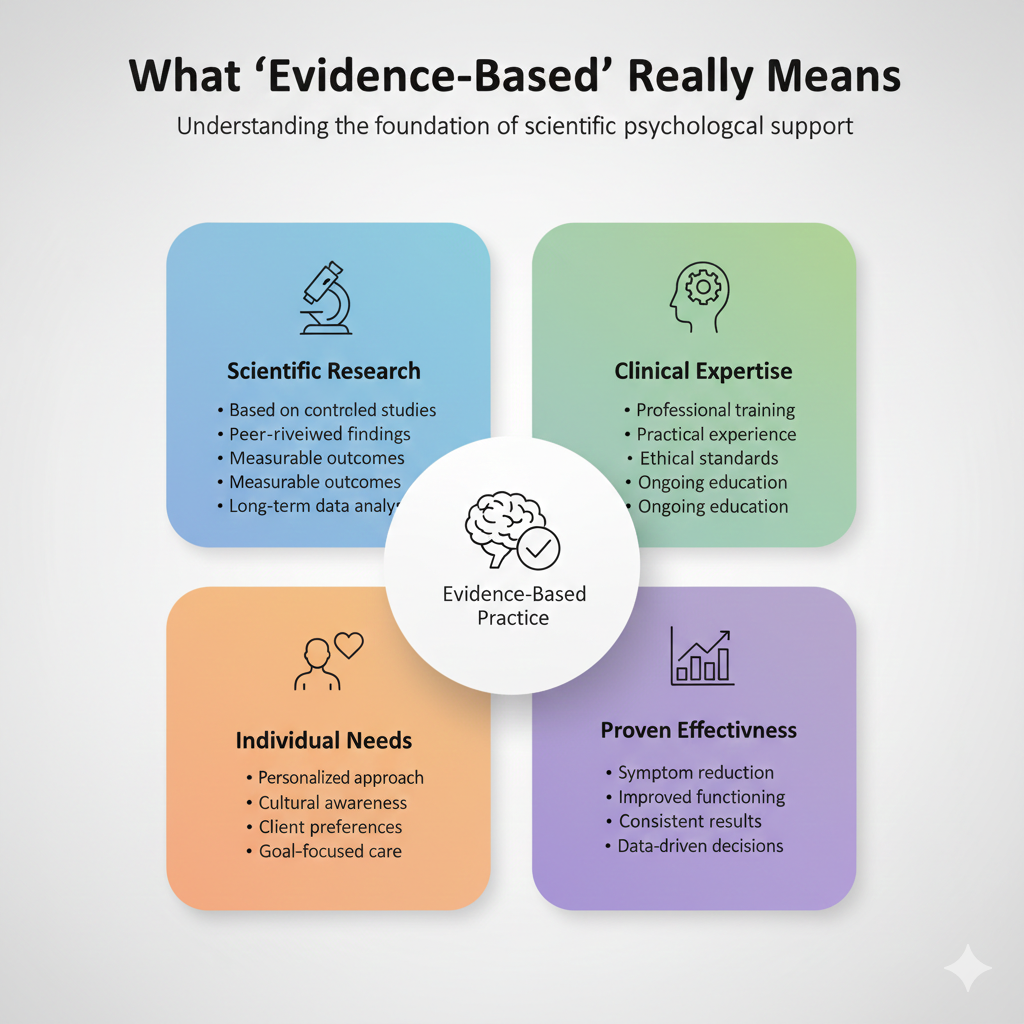
The term “evidence-based” appears frequently in conversations about mental health, yet many people are unsure what it truly signifies. In simple terms, evidence-based psychological support refers to therapeutic approaches and interventions that have been rigorously studied, systematically tested, and consistently shown to be effective through scientific research. It is not a marketing phrase or a vague assurance of quality. It represents a structured commitment to methods that are backed by measurable data rather than personal opinion.
At its foundation, evidence-based practice integrates three essential components: the best available research, professional clinical expertise, and the individual needs of the person receiving support. This means that therapy is not delivered randomly or based solely on what a practitioner prefers. Instead, it draws from established psychological models that have undergone controlled trials, peer review, and long-term outcome analysis. Researchers evaluate whether a particular intervention reduces symptoms, improves functioning, and sustains results over time. If it does, it becomes part of the evidence base.
This approach stands in clear contrast to advice or treatments grounded only in anecdotal stories, tradition, or untested theories. While lived experience can offer valuable insight, it does not replace structured research. An intervention might feel helpful to one individual but fail to produce consistent results across larger groups. Evidence-based care requires repeatable outcomes. It asks whether a method works not just occasionally, but reliably and across different populations, age groups, and cultural contexts.
Another important element of evidence-based psychological support is accountability. Because these approaches are studied and measured, practitioners can monitor progress using established tools and assessment scales. Therapy becomes goal-oriented rather than abstract. Clients and clinicians can track changes in anxiety levels, mood patterns, sleep quality, or behavioural responses. If progress stalls, the treatment plan can be adjusted based on data rather than guesswork. This structured flexibility increases the likelihood of meaningful improvement.
The Role of Education in Mental Health Development
One of the most powerful ways to improve mental health across a society is through education. When people understand how stress affects the brain, how emotions influence behavior, and how to regulate their responses to challenges, they become better equipped to manage their own wellbeing.
Mental health education is not just about treating illness. It is about prevention, resilience, and emotional intelligence. In schools, it helps students build coping skills and confidence. In workplaces, it reduces burnout and improves productivity. In communities, it fosters empathy and stronger social connections.
In Hong Kong, where academic and professional pressures are significant, mental health education can be transformative. It shifts the conversation from crisis response to proactive wellbeing. Instead of waiting for people to reach a breaking point, education provides them with the tools to manage stress before it becomes overwhelming.
The Importance of Early Intervention
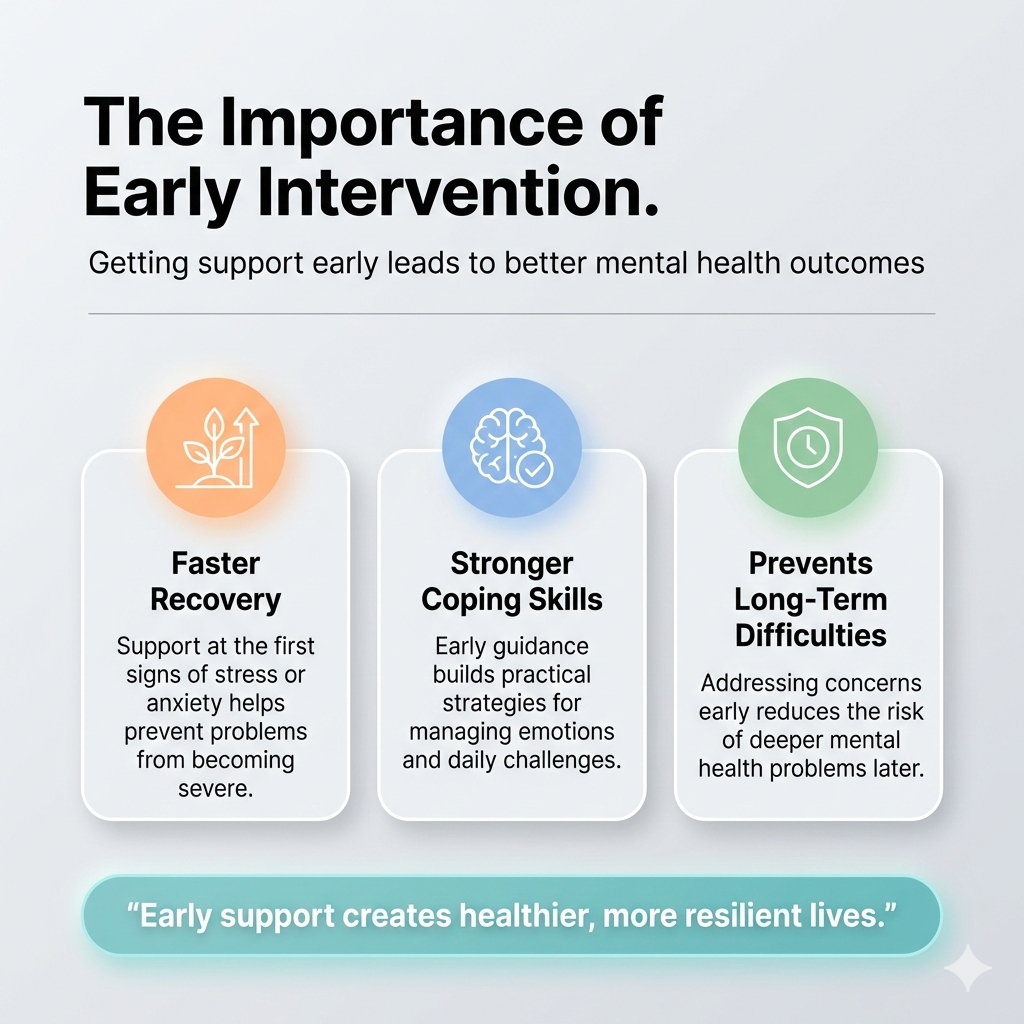
Research across decades of psychological study points to one clear conclusion: getting support early makes a significant difference. When someone reaches out at the first signs of stress, anxiety, low mood, or emotional overwhelm, the path forward is usually smoother. Concerns are addressed before they deepen, coping strategies are easier to build, and recovery tends to take less time. Early support often prevents patterns from becoming entrenched and reduces the likelihood of more serious difficulties developing later.
Despite this, many people postpone seeking help. Some worry about being judged. Others are unsure whether what they are experiencing is “serious enough.” There is also a common belief that emotional struggles should simply be endured or managed alone. In fast-paced environments where productivity is highly valued, personal wellbeing is frequently pushed aside. Appointments are delayed, conversations are avoided, and small warning signs are dismissed until they grow into larger problems.
Waiting until a crisis occurs can make the situation more complex. When stress accumulates without relief, it can begin to affect sleep, concentration, relationships, and physical health. Anxiety that once appeared manageable may turn into persistent avoidance. Low mood may shift into prolonged depression. By the time professional support is sought, the individual may feel exhausted, discouraged, or overwhelmed.
Early intervention interrupts that progression. It creates space to examine what is happening before it becomes unmanageable. Practical tools can be introduced while motivation is still intact. Communication patterns in families or workplaces can be adjusted before damage occurs. Young people can learn emotional regulation skills before academic or social pressures intensify. Adults can reassess workloads, boundaries, and coping habits before burnout takes hold.
Mental Health in the Workplace
Workplaces are one of the most influential environments for adult mental health. In Hong Kong, where professional success is highly valued, work often occupies the majority of a person’s time and energy.
Long hours, tight deadlines, and competitive environments can create chronic stress. Over time, this stress can lead to burnout, anxiety, and decreased productivity. What many organizations are beginning to realize is that employee wellbeing is directly linked to performance, retention, and workplace culture.
When companies invest in mental health education, supportive leadership, and accessible psychological resources, the benefits are clear. Employees feel more engaged, communication improves, and overall performance becomes more sustainable. Mental health is no longer seen as a personal issue, but as an essential component of organizational success.
The Ripple Effect on Families and Communities
Mental health is never confined to one person. When someone is overwhelmed by anxiety, depression, chronic stress, or unresolved trauma, the impact rarely stays contained within their own thoughts. It shows up in daily interactions, in tone of voice, in patience levels, and in the ability to be emotionally available. Families often feel these shifts first. Small misunderstandings can escalate more quickly. Communication may become strained. Children, even when nothing is explained to them directly, sense changes in mood and stability.
In households where a parent is under constant pressure, the emotional climate can become unpredictable. A child may respond by withdrawing, becoming overly anxious, or acting out. Partners may struggle to understand each other’s reactions, leading to frustration on both sides. Over time, these patterns can create distance in relationships that were once steady and warm. The original issue may belong to one individual, but its effects quietly spread through the family system.
Communities experience a similar pattern. When large numbers of people are exhausted, unsupported, or emotionally distressed, it influences workplaces, schools, and neighbourhood dynamics. Productivity declines, conflicts increase, and social trust weakens. Mental health challenges do not remain private matters; they shape the broader social environment.
These positive shifts create momentum. Children raised in emotionally stable homes are more likely to develop secure attachment patterns and healthy coping mechanisms. Couples who address challenges early model constructive problem-solving. Colleagues who prioritize wellbeing help create supportive professional environments. Each improvement, no matter how personal it may seem at first, sends out a ripple that touches others.
This is why community-level mental health awareness and accessible support matter so deeply. When societies invest in education, prevention, and professional care, they are not only helping individuals; they are strengthening the fabric of families and neighbourhoods. Resources that provide reliable and research-informed guidance, demonstrate how accessible tools and structured communication channels can play a role in connecting people with information and support systems in a broader digital landscape.
Wellbeing grows when people are not left to navigate challenges alone. When emotional health is treated as a shared responsibility rather than a private burden, communities become more compassionate and resilient. The ripple effect works in both directions. Struggles can spread, but so can healing. Choosing to support mental health at both individual and collective levels shapes stronger families, healthier workplaces, and more connected communities for the long term.
Breaking the Stigma
Despite growing awareness, stigma remains one of the biggest obstacles to mental health support. Many people still fear judgment, discrimination, or professional consequences if they speak openly about their struggles.
Changing this requires a cultural shift. Mental health must be seen not as a weakness, but as a fundamental aspect of human wellbeing. Just as people seek medical care for physical illnesses, they should feel comfortable seeking psychological support when needed.
Public education, open conversations, and visible mental health initiatives all contribute to this shift. Over time, these efforts help normalize help-seeking behavior and create a society where mental wellbeing is valued as much as physical health.
A Future Focused on Wellbeing
The direction of mental health in Hong Kong is gradually moving toward a more proactive and informed model of care. Greater public awareness is already changing how emotional wellbeing is discussed, and this shift is likely to continue. As understanding deepens, access to professional support will expand, and prevention will take a more central role rather than being treated as an afterthought. Instead of waiting for crisis points, systems will increasingly be designed to identify stress, burnout, and emotional strain at earlier stages.
Education will play a critical part in this transformation. Schools are expected to integrate mental health literacy into everyday learning, helping students understand emotions, stress responses, and healthy coping strategies from a young age. When children grow up with the language and tools to describe their feelings, they are better equipped to manage academic pressure and social challenges. Workplaces will also evolve. Employers are recognizing that productivity and psychological wellbeing are closely connected, and structured mental health initiatives, staff training, and accessible counselling support are becoming part of long-term organizational planning rather than temporary programs.
As professional services become more accessible, evidence-based psychological support will be more widely understood and available to the community. Reliable therapeutic approaches grounded in research will form the backbone of care, offering structured and measurable pathways toward improvement. This consistency strengthens public trust and encourages more people to seek support without hesitation. When individuals know that effective, research-supported options exist, uncertainty decreases and confidence in the process increases.